
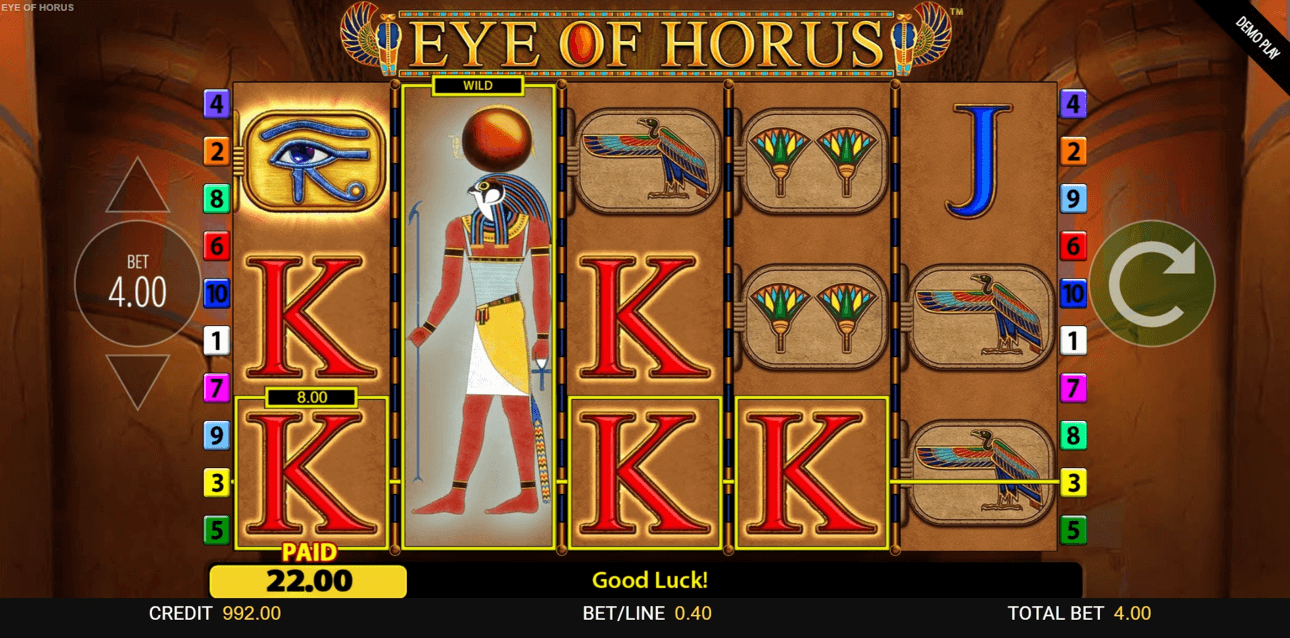
The Eye of Horus online slot has developed a loyal following, and a big part of its charm comes from how it looks and feels. Across the UK’s vibrant gaming scene, players and critics alike continually emphasize one point: its artistic quality and technical finish are something special. The game’s design philosophy embraces a deep, atmospheric pull over loud, flashy effects. It captures the mystery of ancient Egypt not with brute force, but with a careful, compelling visual style. This attention to detail demonstrates that a digital slot’s lasting power often depends on the nuance of its presentation and the confidence of its aesthetic vision. That focus on quality is why many now label it a modern classic, a regular example in conversations about how to do theme right in iGaming.
The Core Aesthetic: An Expedition to Antique Egypt
Open the game, and you’re instantly somewhere else. The screen is filled with a vivid vision of old Egypt, painted in deep blues, burnished golds, and soft sandy tones. It sidesteps the bright, cartoonish style you find in many other themed slots. This one aims for something more majestic and grounded. The reels are set before a serene, star-lit temple interior, hieroglyphics faintly visible on the stone walls. Every visual piece, from the symbols to the buttons, contributes to a single, unified story. The effect is a slot that seems less like a random number generator and more like an artifact you can interact with. It stimulates your senses before you even hit spin. Distant desert winds and subtle, mystical chimes on the soundtrack finish the picture. Lighting is managed with a masterful touch. Soft glows follow the edges of stonework and symbols, creating depth and a quiet sense of mystery that compels you to look closer.
Symbol Design: Iconography with Meaning
The icons on the reels are examples in thematic sharpness and craft. The lesser symbols take the classic playing card signs and reimagine them as refined Egyptian relics. You’ll discover scarab beetles for spades and ankhs for hearts, all crafted in shining gold. For the high-value icons, the title looks to legendary deities and treasures. There’s the imposing god Horus, the wise goddess Isis, the protective Wedjat eye, and a stunning golden necklace. Each one is rendered with detailed line work and a impression of tangible weight, making them recognizable and pleasing when they line up for a win. This imagery does more than decorate. It educates and draws you deeper, turning each spin into a tiny tale about the culture it references. Take the scarab. It’s not just a club alternative. It’s an old sign of regeneration and metamorphosis, adding a dimension of meaning to the action. Look at the texture on that golden necklace. You can notice suggestions of lapis lazuli and carnelian setting, a degree of craftsmanship that goes beyond standard slot design.
Animation and Motion: Subtlety Enhances Gameplay
Many slots use screen-shaking animation for every minor event. Eye of Horus follows a distinct route. It employs motion with control and defined purpose. A win earns a pleasing chime and a gentle, glowing pulse around the winning symbols. The Horus wild symbol gives a dignified flap of its wings when it lands. The big animations are kept for special features. The expanding Eye of Horus wild, for instance, takes over its reel with a strong, radiant effect. This layered approach preserves the core gameplay fluid and clean. It also ensures the major events feel genuinely important. The motion supports the game in place of fighting with it. UK reviewers often point out this balance, calling it player-friendly and sophisticated. When the Free Spins round starts, the shift is indicated by a subtle visual change. The temple backdrop looks bathed in a fresh, more magical light. It announces the change without unsettling you. The expanding wild’s animation is a highlight. It does not simply enlarge. It opens with a slow, deliberate power that emphasizes its importance on the reels.
UI: Readability Achieves Style Unification
A slot’s interface is essential, but it’s usually an afterthought eyeofhorus.games. Not here. Eye of Horus blends its control panel into the overall design. Controls for spin, bet change, and autoplay look like historic stone tablets or carved metal. The lettering on them is clear and clear. Your balance, bet value, and most recent win are presented visibly, but they don’t interfere with the game’s visuals. The paytable is straightforward to access and just as beautifully presented. This harmony means you’re always yanked out of the atmosphere by a disruptive, modern-looking menu. Use feels intuitive and native to the game world. Designers used subtle metallic textures and worn edges on every UI element, making them look part of the temple architecture. Even the figures for your credit amount and bet size use a style that evokes chiseled stone text. It’s a detail that strengthens the concept at every point, displaying a holistic design philosophy.
Technical Performance: Graphics That Deliver
Beautiful graphics mean little if they lag or slow down, particularly on a phone. The technical performance of Eye of Horus is a significant factor of its aesthetic reputation. The game uses optimized assets and optimized programming to provide sharp, smooth graphics on any platform. If you’re using a desktop, smartphone, or tablet, the visuals adjust seamlessly. No element loses detail or function. This refinement guarantees the creative intent arrives as the developers envisioned, however you choose to play. With mobile play now leading the market, this consistent, top-tier functionality is a key element in the game’s lasting popularity. Load times are swift, even on lower-bandwidth links, thanks to intelligent resource handling. The image processing stays uniform across various platforms and browsers. This indicates of extensive validation, avoiding the visual bugs and layout problems that trouble less polished titles.
Relative Visual Position in the Sector
The arena is filled with Egyptian-themed slots. Eye of Horus creates its niche with artistic authenticity and restraint. Many competitors opt for over-the-top 3D graphics, flashy effects, and a din of sound. This title adopts a classic, calm approach that values elegance. That choice has struck a chord with players who desire class and thematic depth. Users don’t commend its imagery for being the most digitally cutting-edge. They commend them for being among the most harmonious and evocative. The release demonstrates visual excellence isn’t just about polygon numbers or particle elements. It’s about implementing a strong artistic guidance consistently, from the smallest character to the entire setting. Stack it next to releases like “Book of Dead” or “Cleopatra.” Eye of Horus offers museum-piece elegance instead of high-octane adventure. It speaks to a different player preference. Its achievement has probably shaped a move toward more polished aesthetics in more recent games. It demonstrates visual understatement can be a strong commercial and critical advantage.
Frequently Asked Questions
What sets apart the graphics of Eye of Horus stand out?
Its graphics stand out because they build a unified, genuine ancient Egyptian world. The color palette of blues and golds is sophisticated. It avoids a cartoonish look, focusing instead on atmospheric immersion with intricate symbols and a serene temple backdrop. The refinement and uniformity of the visual design create an engaging experience that appears majestic and meticulously inspired.
Do the animations in the game distracting?
Not at all. The animations are understated and meaningful. Wins get a gentle glow. Major features like the expanding wild have more marked effects. This tiered approach preserves gameplay seamless and prevents unnecessary distraction. It lets the thematic immersion remain intact. Players and reviewers like this equilibrium, saying it boosts the game’s flow.
To what extent does the game function on mobile devices?
It performs quite well on mobile. The game’s assets are optimized to deliver crisp, fluid visuals on smaller screens. There’s no noticeable lag or loss of detail. The interface scales intuitively, maintaining all functionality and the high-quality look. This dependable cross-platform performance is a key reason for its success with mobile players in the UK.
Is it user interface easy to comprehend?
Indeed, it’s apparent and thematically integrated. Controls appear old stone tablets or etched metal, fusing with the game’s art. Key data like your bet size and balance is displayed clearly in an easy-to-read style. The paytable is also easy to access. This creates the game intuitive for beginners and veterans from the first spin.
Which are the most rewarding symbols?
The highest-paying symbols are symbols from Egyptian mythology. You seek the god Horus, the goddess Isis, the Wedjat eye (Eye of Horus), and an elaborate golden necklace. These are crafted carefully and yield the biggest payouts. The classic playing card suits emerge as Egyptian relics like scarabs and ankhs for the lesser symbols, forming a flawless thematic order.
Does the game have any aesthetically striking bonus features?
The most impressive is the Expanding Eye of Horus Wild. When it appears and aids create a win, it expands to cover the whole reel, combined by a radiant animation. The Free Spins feature, triggered by scarab symbols, also boosts the visuals with its own special mode. It maintains the atmospheric aesthetic while increasing your winning potential.
How the visual style compare to other Egyptian slots?
In contrast to many Egyptian slot games, Eye of Horus chooses classic elegance and authenticity. It steers clear of chaotic animations and garish colors. Instead, it creates immersion through a consistent, serene art style. This refined approach has garnered acclaim for its sophistication and cohesion. It draws players who desire a more atmospheric, less overwhelming experience than flashier rivals deliver.
The ongoing praise from the UK market for Eye of Horus underscores a basic rule of game design. Lasting player engagement is based on atmosphere and artistic integrity. By establishing a powerful, consistent visual identity, from its iconic symbols to its intuitive interface, the game goes beyond mere functionality. It provides a genuine escape. It demonstrates that in a digital landscape often shouting for attention, clarity, purpose, and thematic depth can build a stronger, more enduring connection with players. Sometimes, timeless aesthetics simply outlast fleeting graphical trends.